Most people who start a business don’t get the product wrong. They get the order wrong. They build for six months, then find out in the seventh that they have nobody to sell to. This kit flips the order: in seven days, you go from an idea to a first message sent to a real person.
Seven days, seven decisions, five tools. None of this requires knowing how to code, or a budget beyond a few subscriptions you can all trial for free. What it does require: doing it in order, and not skipping day 2.
What you have by Sunday night
- An offer written on one page, that you can read out loud without wincing.
- A first version online, that a stranger can visit and understand.
- A coherent visual identity: two colours, one typeface, three assets.
- Thirty qualified prospects and a first campaign sent, follow-ups included.
This is not a finished business. It’s a business that has started talking to people. That is exactly what most projects never reach.
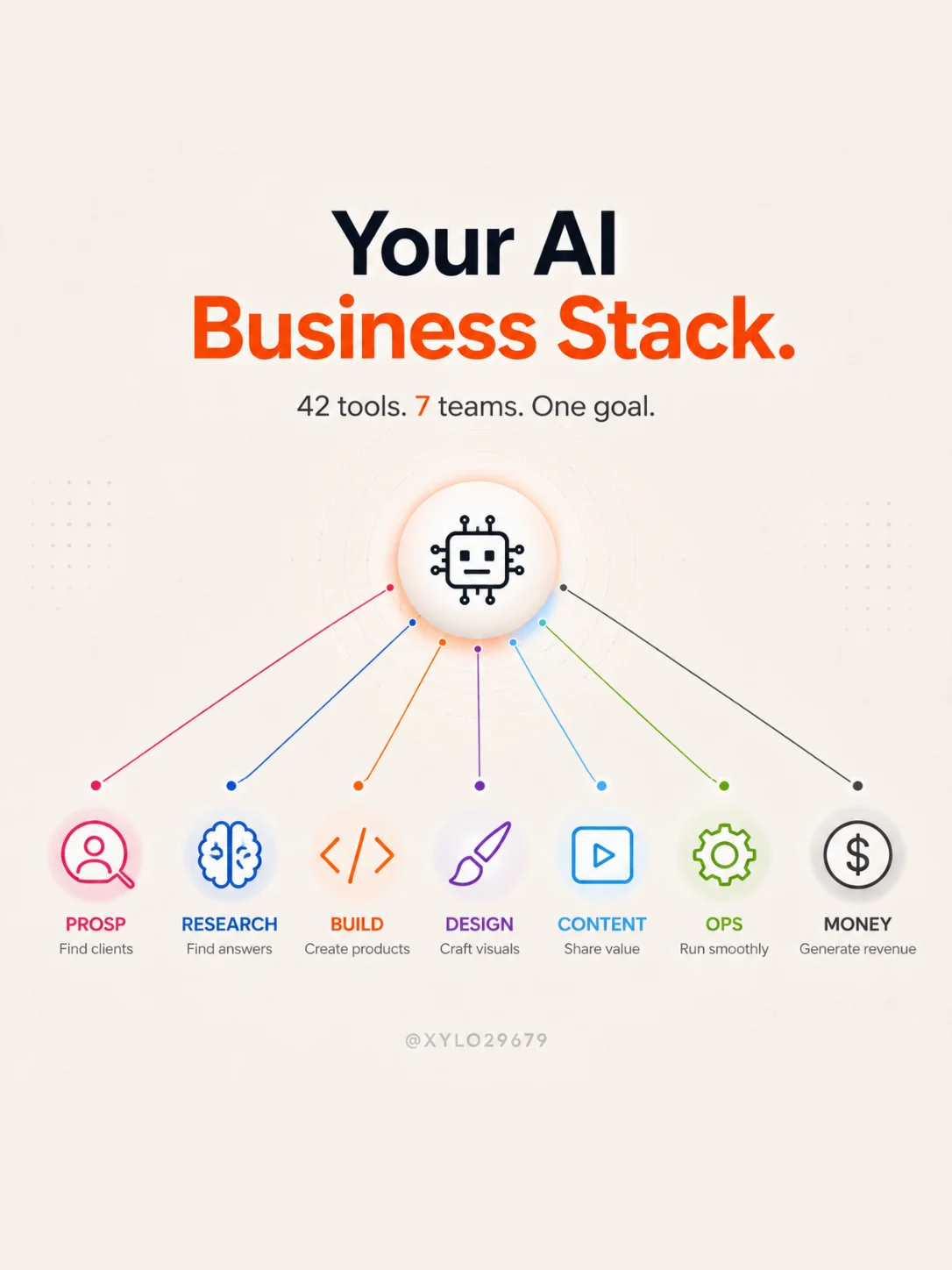
The five tools, and when each one earns its keep
Every day has one tool doing the heavy lifting. None of them decides for you, which is the point: the decisions are the only part that’s genuinely yours.
| Days | Stage | Tool |
|---|---|---|
| 1 to 3 | StrategyFind the idea, test it, write the offer | ChatGPT or Claude |
| 4 | BuildingShip the first version | Lovable, Replit or Framer |
| 5 | DesignIdentity, assets, profile picture | Canva or Figma |
| 6 and 7 | OutreachFind the first customers and write to them | Lihn |
| After | ContentBecome visible while the campaign runs | CapCut or Higgsfield |
Day 1
Find an idea that already has buyers
Move from an idea that’s “interesting” to one somebody already pays for, even badly.
Start without the AI. Write three lists of ten lines, by hand if you can: what you do better than most people around you; the industries you know from the inside, even from a summer job; the things that genuinely annoyed you at work over the last three years.
The third list is the valuable one. A business idea is almost always an annoyance somebody else shares — and already pays to make go away.
Only then do you cross the three lists with the AI.
You are a product strategist helping a solo founder pick a first sellable offer.

Here are three lists about me.
SKILLS: [paste your list]
INDUSTRIES I KNOW FROM THE INSIDE: [paste your list]
WHAT ANNOYS ME ABOUT THOSE INDUSTRIES: [paste your list]

Give me 8 offer ideas at the intersection of these three lists.
For each one, one line each:
- exactly who it is for (a job title, a company size);
- the concrete problem, phrased the way that person would say it themselves;
- what those people do about it today, and what that costs them;
- who already sells something comparable.

Rule out the ideas where nobody spends money today, and tell me why you ruled them out.
Keep three ideas. One rule to choose between them: is somebody already spending money on this problem — on a tool, a contractor, an employee’s hours? If the answer is no, that’s not an untapped market, that’s an absent one.
Day 2
Check before you build
Replace your opinion with five conversations with people who have the problem.
This is the day everyone skips, and the only one that really decides what follows. You are not selling anything today. You are listening.
Find ten people living with the problem: LinkedIn, industry groups, trade forums, your own contacts. Write them something short that offers nothing.
I'm preparing 5 discovery conversations with [describe the person precisely:
job title, company size, city].
I want to test this problem: [describe the problem in one sentence].

1. Write me a first-contact message, 4 lines maximum, that sells nothing and asks
   for 15 minutes.
2. Write me 6 interview questions about what the person HAS ALREADY DONE,
   never about what they would do.
3. For each question, tell me which answer should make me drop the idea.

Banned: "would you use", "would you pay", "what do you think of".
Rewrite everything in the past tense.
During the call you are after four things: the last time the problem came up, what they did about it then, what it cost them in money or hours, and what they use today to cope.
Day 3
Write the offer on one page
Fit what you sell, to whom, and why it’s worth that price into six lines.
An offer that fits on one page sells. An offer that needs three pages gets negotiated.
- Who it’s for — a job, a size, a situation. Not “small businesses”.
- Which problem — the sentence from day 2, in their words.
- What they get — an outcome, not a feature list.
- How it works — three steps, no more.
- How much — a stated price, even a provisional one.
- Why you — one sentence, true and checkable.
For the price, don’t start from the time it takes you: start from what the problem costs your client. If you save two days a month for somebody who bills £400 a day, you are not selling three hours of your time.
Day 4
Build the first version
Get an address a stranger can open and understand in ten seconds.
One page. Genuinely one: the promise at the top, who it’s for, how it works in three steps, one piece of proof, one button. One button — two different buttons is one more decision asked of somebody who just met you.
Which tool depends on what you sell. Selling a service means you need a site: Framer is faster and looks better. If the product is the software, Lovable or Replit give you a real application in a day, even if you rewrite it later.
Day 5
The identity, in half a day — no more
Be credible. Not award-winning.
The rule is three numbers: two colours, one typeface, three assets.
- One main colour, one dark text colour. That’s it.
- One typeface, in two weights. Pairings show, and they go wrong.
- A logo written as text. A symbol comes later, once you know who you are.
- Three reusable assets: a banner, a quote background, a cover.
- The same profile picture everywhere. That’s what people recognise, not the logo.
Day 6
Find your first thirty prospects
Thirty specific names, with a written reason next to each one.
This is where most launches stop. The product exists, the page is live, the identity is clean — and nothing happens, because nobody knows it’s there. The five previous days are only worth what this one makes of them.
Thirty isn’t a modest number out of caution: it’s the point at which silence starts to mean something. Below it you learn nothing. Above it you can no longer personalise.
Every name has to pass three questions: does this person have the problem from day 2? Do they have the authority to say yes? Can I write, in one line, why I’m contacting them? If the third question has no answer, the name goes.
That’s the work Lihn does: you describe what you offer and to whom, it looks for the companies that match, and it tells you why each one was kept. You keep control of the list — you’re the one who removes names. It isn’t the tool that makes your offer good; it’s the one that stops you building a business without ever going to find customers.
Day 7
Send the first campaign
Thirty messages out, and a follow-up that continues without you.
The message is four lines. One line showing you looked at who’s on the other side. One line on the problem. One line on what you do. One question at the end — a single one, easy to answer yes or no.
What brings replies isn’t writing talent: it’s the follow-up. A first message, a follow-up at three days, a last one at seven. Most replies land on the second. That is exactly the part nobody keeps up by hand, and the part a tool keeps up perfectly.
Three rules not to negotiate, before you press send:
- Write from a professional address on your own domain. A personal inbox has neither the reputation nor the right to send commercial mail.
- In B2B, you can contact somebody at their work address if your offer relates to their job. That’s the boundary: if you have to strain to explain the connection, you’re outside it.
- Every message says who you are and lets people opt out in one click. That isn’t a formality, it’s what keeps you out of spam folders.
There is no day 8
What follows isn’t a week any more, it’s a reading. Replies start arriving between the third and the tenth day, and they tell you what to fix — provided you know how to read them:
- Zero replies out of thirty — it’s almost never the message. It’s the targeting. Go back to day 6.
- Replies, but no meetings — the message lands, the offer isn’t clear. Go back to day 3.
- Meetings, but no sales — it’s the price, or the person in front of you can’t decide. Work out which before you discount anything.
Three positive replies out of thirty is a successful week. It doesn’t look like one. It is nonetheless the point where a project stops being an idea.
Your product is ready. Now people need to know.
Days 6 and 7 don’t stop on Sunday: they start again every week, and that’s what separates a launched project from a living one. Lihn finds the companies that match your offer, drafts the messages, sends the follow-ups you planned, and hands you back control the moment a real reply arrives.
Try Lihn for freeYou decide. Lihn does the rest.